


Why Low-Pressure Hoses Improve Spray Foam Accuracy
- Aug 13, 2025
- 5 min read
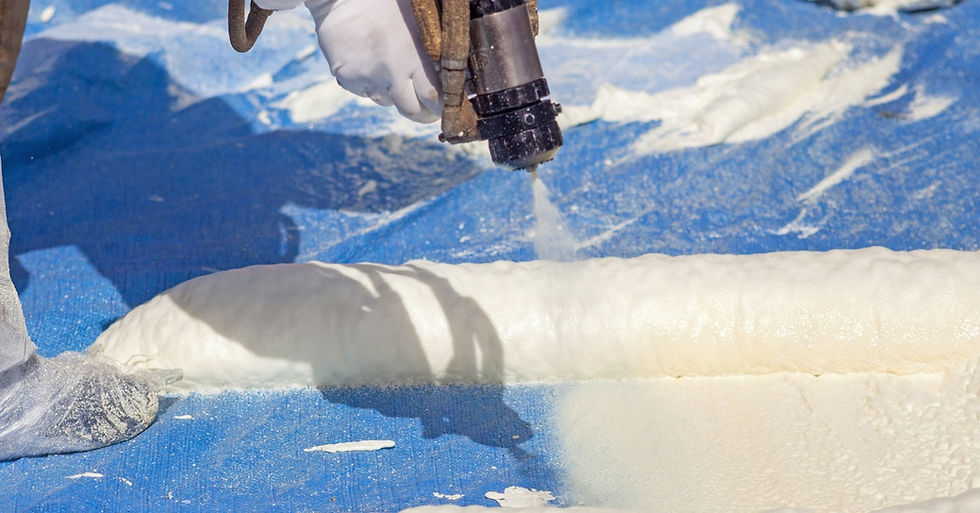
Spray foam insulation is popular in the construction and renovation industry, offering superior thermal performance and air sealing capabilities. However, achieving optimal results depends on your equipment. While many contractors focus on spray guns and mixing chambers, the hose connecting these components determines the quality of your foam application.
The choice between high-pressure and low-pressure systems often comes down to material behavior, equipment performance, and expected outcomes. When contractors make the switch to low-pressure hoses, they may see improvements they never even knew were possible. Let’s explore why low-pressure hoses improve spray foam accuracy.
1. Consistent Material Flow
Low-pressure hoses excel at delivering steady material flow throughout the application process. High-pressure systems may experience pressure fluctuations that create inconsistencies in foam output, leading to areas of varying density and coverage. These fluctuations can occur due to temperature changes, material viscosity variations, or equipment cycling.
When operating at low pressures, the system experiences less turbulence within the hose lines. This smoother flow translates to more predictable spray characteristics, allowing contractors to maintain consistent application rates across large surfaces. The result is foam with uniform density and thermal properties throughout the entire installation.
2. Reduced Material Waste
Material costs are a significant portion of any spray foam project budget. Low-pressure hoses help contractors maximize their material efficiency through several mechanisms. The gentle pressure reduces the likelihood of material degradation within the hose, preserving the chemical properties for foam expansion and curing.
High-pressure systems often force contractors to purge more material at startup and between applications for correct mixing ratios. Low-pressure hoses require less purging due to their improved flow characteristics, directly reducing material waste. Additionally, the reduced pressure minimizes the risk of material separation within the hose, which can lead to the disposal of contaminated foam.
3. Enhanced Mixing Precision
Mixing polyol and isocyanate components is critical for spray foam performance. Low-pressure hoses contribute to superior mixing by delivering materials to the spray gun at consistent ratios and velocities. High-pressure systems can create mixing imbalances due to pressure variations that affect component flow rates differently.
The reduced-pressure environment allows for more precise control over individual component delivery. This precision is particularly important when working with specialized foam formulations that require exact mixing ratios to achieve desired properties, such as R-value, compressive strength, or fire resistance.
4. Improved Spray Pattern
Spray pattern quality directly affects coverage efficiency and finish appearance. Low-pressure hoses enable more controlled spray patterns by delivering materials at pressures that work optimally with spray gun design. Many spray guns perform best within specific pressure ranges, and exceeding these ranges can distort the spray pattern.
Lower operating pressures reduce the tendency for overspray and create more defined spray edges. This improved control allows contractors to achieve cleaner lines when spraying around obstacles or creating foam thicknesses. The result is a more professional appearance and reduced need for trimming or touch-up work.

5. Decreased Overspray
Overspray poses material waste and potential cleanup challenges. High-pressure systems generate fine droplets that travel beyond the intended application area, coating nearby surfaces and creating environmental concerns. Low-pressure hoses reduce overspray by maintaining larger droplet sizes and more controlled spray velocity.
Less overspray has practical benefits beyond material savings, including reduced masking requirements, faster cleanup times, and fewer issues with foam adhering to unintended surfaces. This is particularly valuable when working in occupied buildings or around sensitive equipment.
6. Better Adhesion
Foam adhesion depends on several factors, including substrate preparation, environmental conditions, and application technique. Low-pressure hoses contribute to improved adhesion by delivering foam at optimal conditions for bonding. The reduced pressure allows foam to contact surfaces with appropriate impact force, ensuring good contact without bouncing or spattering.
High-pressure applications can sometimes deliver foam with excessive force, causing it to bounce off surfaces or create air pockets at the interface. Low-pressure systems deposit spray foam in a way that conforms to surface irregularities and establishes strong bonds.
7. Uniform Coating Thickness
Achieving consistent foam thickness across large areas requires precise control over material delivery and application technique. Low-pressure hoses support uniform thickness by enabling more controlled buildup rates. Contractors can apply multiple thin coats with confidence, knowing that each pass will deliver predictable amounts of material.
High-pressure systems encourage single-pass applications in order to minimize setup time, but this approach can lead to thickness variations and potential performance issues. Low-pressure systems make multi-pass applications more practical by reducing material waste and improving spray control.
8. Minimized Air Pockets
Air pockets within spray foam installations can compromise thermal performance and create moisture infiltration pathways. Low-pressure hoses minimize air pocket formation by delivering foam at pressures that promote good flow and self-leveling without excessive turbulence.
High-pressure applications can trap air due to rapid foam expansion and turbulent mixing. The gentler delivery characteristics of low-pressure systems allow foam to flow into crevices and around obstacles while displacing air.
9. Lower Equipment Wear
Operating equipment at lower pressures reduces mechanical stress on all system components, including hoses, fittings, pumps, and spray guns. This translates to longer equipment life, fewer maintenance requirements, and reduced operating costs.
High-pressure systems subject hoses to continuous flexing under extreme pressure, fatigue-induced failures, and costly downtime. Low-pressure hoses experience less stress cycling, resulting in longer service life and more predictable replacement schedules.
10. Greater Operational Control
Low-pressure systems provide contractors with enhanced control over all aspects of the application process. The reduced-pressure environment makes it easier to start and stop spray operations, adjust flow rates, and respond to changing application requirements.
Improved control is particularly valuable when working in tight spaces, around delicate surfaces, or with multiple layers. Contractors can work more confidently knowing that their equipment will respond predictably to adjustments.

The Importance of Having a Reliable Equipment Supplier
Successful spray foam applications depend on using the right equipment and partnering with suppliers who understand the technical requirements of low-pressure systems. A reliable equipment supplier provides technical support, training, and ongoing maintenance services for optimal system performance.
Quality suppliers maintain an inventory of critical components, provide rapid response to equipment issues, and offer training programs that help contractors maximize the benefits of low-pressure systems. They also stay current with industry developments and can recommend upgrades or modifications that improve system performance.
Maximizing Your Spray Foam Success
Using low-pressure hoses improves quality, reduces costs, and enhances competitiveness. By understanding why low-pressure hoses improve spray foam accuracy, you can deliver superior results while reducing operational challenges and material waste.
If you’re considering the switch to low-pressure systems, the Handcrafted Hose Company should be your first stop. Investing in our low-pressure equipment pays for itself through reduced material costs, improved efficiency, and enhanced customer satisfaction. With our wide selection of spray foam hoses, you’ll have no trouble completing your next insulation project.


